Connection & Community
Bumps and Bows
In early 2020, prior to our first NZ lockdown, we tended to be cautious about physical contact. We stopped our traditional handshaking at Toastmasters club meetings and moved to bumping elbows or bowing to each other. This sometimes led to an amusing dance between the meeting chairman and the next speaker, as they tried to match gestures.
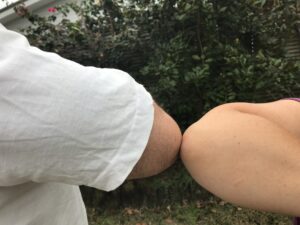
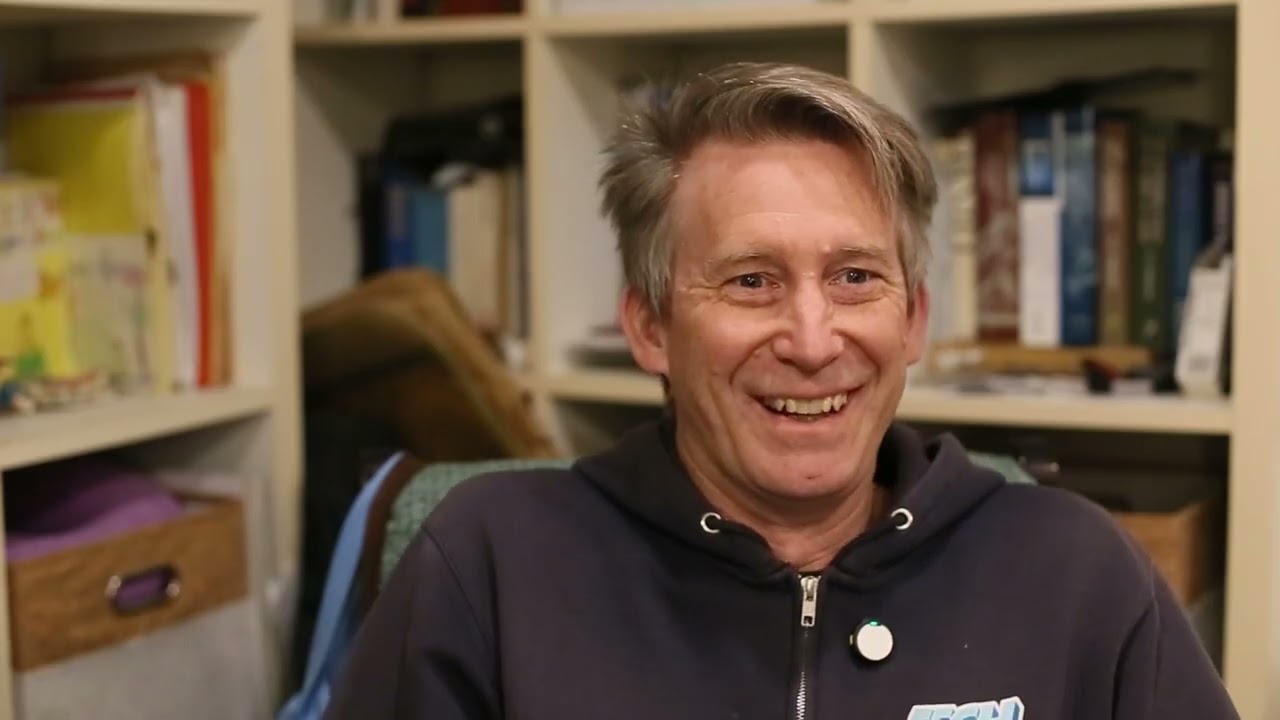
“There wasn’t a lot of guidance around, whether it’s from the Government, on how we should handle in person meetings. Like, do we still shake hands? Do we start bowing? Just a lot of the long minutia of running a club? Like, should people remain masked until they’re speaking, that sort of thing? Possibly would have been good to have a little bit more guidance on or a little bit more something we can refer to… potentially something that we could rely on to say, ‘Hey, this is Toastmasters guidance. We should all fist bump, or we should all bump elbows, or just do a little bow towards each other’ as just some sort of this is the guidelines that International is putting out during this time frame.” Cameron (Toastmasters at Lunchtime)
“We still went to the pub after the meeting, but we did not hug each other. We did not shake (hands with) each other. We just elbow bump each other when we greet each speaker. We still tried to meet in person, and we also had hand sanitizer on standby.” Lily (Orakei)
“One of the women in our club turned out that she got a call from the contact tracing people to say that she had been sitting next to somebody in a doctor’s waiting room who had later tested positive for covid.We had given her a lift home from something … she had to let us know that she’d been exposed to covid, and her and her household were in complete and utter isolation and lockdown. (She would have been) taken to one of those isolation facilities (Editor: MIQ – Managed Isolation Facility), except that she was feeding her little baby at that point, and so they managed to negotiate to stay in their home. She thought she’d go crazy and she’d have to leave the other kids, and it just didn’t seem sensible. So she got special permission to stay at home, as long as no one left or entered the house for two weeks, I think. So, yes, that was a bit stressful. So for a little while, for a couple of weeks after that, we were like, ah, is it possible that we’ve got covid, and we have to be extra careful not to see anybody, because if we’ve got it, we don’t want to pass it on. So interaction with people was quite stressful back then.” Monica (Orakei)
“Although we were more connected than ever, we were also connected in a very different way, and then less connected in the physical type of sense. We all had to learn this interesting new language of staring down the barrel of the camera and not having people to high five or to handshake. It was a very different type of interaction…. Between at least myself and the Toastmasters community, Zoom and/or video conferencing opened up a huge world to us, and in that instance, connection was far greater than it had ever been.” Troy (Paihia, Northern Impromptu)
“I can’t High Five the person who lives eight hours from me, but I can still have a semblance of that connection, and still interact and have fun. So definitely, while there is a lack of physical contact, I’d say I feel more connected to my Toastmaster whānau (family group) in the last five years of my Toastmaster journey, than in the first five years before Zoom became commonplace.” Daniel (Toastmasters @ Lunchtime, Northern Impromptu)
Social Connection through Video & Outdoors
Our shared Toastmasters experience enabled us to maintain and build on our sense of connection and community through lockdowns and Alert status changes.
“My club was able to continue meeting, which was ideal. It gave me that connection, that outside connection that otherwise could be missing. Toastmasters is a great social outlet as well as a great speaking outlet. And so being able to remain connected during that time was something that I found very valuable, that Toastmasters and my club in particular, was able to provide for me.” Cameron (Toastmasters @ Lunchtime)
“We had an extra meeting where we had virtual drinks, and I guess that just showed that we really wanted to be in touch with each other. We enjoyed each other’s company, and wanted any excuse to be able to interact with each other.” Monica (Orakei)
“So after the meeting, we still lingered, and we usually (wanted) to just catch up because we really missed the pub. We probably just bring a drink to the computer and pretend they were still catching up in a pub, just a virtual pub…. During the first wave we (could) get takeaways. I probably just went out to buy some takeaways, and my friends bought others. We just have extra and or just drop off at each other’s place. And we wanted to have a shared lunch, or when it was allowed to have a street or people gathering in the park. So we bought a little bit of lunch and went out. And we also did that with our club in Orakei. We had a meeting on Tamaki Drive, and we brought our own food to have a meeting there in the open air, it was really nice.” Lily (Orakei)
“Silver Service managed to retain its membership over the 20 person mark, and I think that is because we did a lot to keep each other involved in between meetings, we would keep in contact frequently, check in with each other. We tried to make our online meetings as engaging as our in person meetings. And I think that for some who were living either on their own or just as a couple, you know, it was an opportunity to talk with other people outside of their bubble. A bubble is like your family group that you live with.” Serena (Orakei, Silver Service)
“I think it did take some of the warmth and the personality out of the Toastmasters meeting, because it’s a lot harder to have that interpersonal connection through a computer screen, especially welcoming new people…. (Moving online) hindered new connections, but it enabled you to maintain the existing connections. So it sort of put it in a stasis… that it didn’t allow me to develop them further…. It also allowed me to maintain what was already existing, so that I didn’t lose those connections that I’d already built from before COVID. But I would say that it hindered the ability to make new connections in as great depth as an in person meeting would be able to.” Cameron (Toastmasters @ Lunchtime)
“I do remember having a committee meeting on our deck when it was that stage where you were allowed to have small groups of people meeting together, as long as you were outside.We had a covered-in deck, and you didn’t have to walk through the house to get to it. So ours was kind of the one house that actually worked to do a meeting. And so we had the committee meeting outside on the deck. I think it was quite a cold day, but we just coped.” Monica (Orakei)
“Because the lockdown was on and off for a couple of times, we decided we can have a meeting outside in the park. And I think once we had a Christmas meeting in one of the parks in St Heliers (Editor: Madills Farm Reserve in Kohimarama). We also invited other Toastmasters like Marlene (Krone) and maybe Stephen Budai (District Director 2021-2022) to come to our meeting. People out there were curious, because it was a dog park, so the dogs were most curious about us, and they kept passing by and staring at us. We were not really bothered by the people, but just the dogs came to us all the time. It was really nice and, when we could meet in person regularly, we just stopped doing that.” Lily (Orakei)
No Toastmaster is an Island
Toastmasters was a welcome break from their lockdown household “bubble” for many members. The clubs which thrived in that time tended to be the ones which did more than just keep to their regular meetings. They kept in frequent contact informally, providing company and entertainment for those who lived alone.
“I got to have regular contact with some friendly faces that weren’t inside the house, in my bubble. Other people that I could talk to and interact with, check in with how they were going. Get some interesting input from different people’s speech contests topics, and we also had drinks. So the week that we weren’t meeting, we would have virtual drinks.” Monica (Orakei)
“(Toastmasters) Enabled connection between us which was especially important in Auckland with all the lockdowns. Support systems for some of our socially vulnerable toastmasters were also enabled.” Rachel (Manurewa TALK, Madhatters)
“I remember being acknowledged, hey, you’re here. Because I had no role. So I went, ‘Oh, I don’t have to do it. I found myself free at the right time. And I mean, I can jump in anyway.’ Everyone seemed really happy that I was there, which … just raised the spirits, just that little bit. It made me feel very wanted at the time that someone had gone out of their way to go, ‘I know Daniel might not be here for this meeting, but I have made I’ve got this (Table Topics) question, and I know it will be good for him, so I’m going to write it down.’ It was probably one of my favorite Table Topics to give because it was something ridiculous…. I can’t remember, but it felt comfortable. It felt easy, and at the end, I got a clap, and that was so simple, but so useful at the time…. Having something almost feel more like home while I’m away, it adds that little bit more joy…. If it had happened a year before, it wouldn’t have impacted my day. It was the small moments that got me through being locked in a house by myself.“ Daniel (Toastmasters @ Lunchtime, Northern Impromptu)
“I enjoyed them (online meetings). I enjoy the versatility, and I enjoy the idea of being able to chill out in your pyjamas with your dinner beside you or and with the cat or the dog on your lap. It’s a really cool and totally unique feeling that it has its own place. Granted, in person meetings have their own place too, but I think it’s certainly carved out its own piece of paradise here.” Troy (Paihia, Northern Impromptu)
“Sadly, during one of the lockdowns, one of our members passed away. Another member drew his widow into her bubble so that she wouldn’t be alone as her children lived down in Auckland and she couldn’t get to share a bubble with them. We were so delighted and happy to be able to support each other in those tough times, and it just showed us what we were made of.” Rose (Good Vibes, PN Advanced, Rosedale, Toastmasters @ Lunchtime, Witty Storytellers, Northern Impromptu)
“There is a family I’ve built with Toastmasters…. I have ADHD. It causes difficulty with attention. I have difficulty with memory problems, and I struggle with my impulse control. So Toastmasters has been a valuable tool in that journey. But it also means that if I don’t see people regularly or have regular contact, I kind of forget about them, and it can cause a real strain on my mental health. One of the big problems I was really worried about when I started, when COVID first happened, and I talked to my dad about it, is that I was worried that my connections with the people I built at Toastmasters would start to go away simply because I wasn’t seeing them. And I very much was happy with the fact that I got to still build some connections online. To the point where, as a club, we talked about coming completely off hybrid at one point, and I sat there and went, ‘No, no. This is comfort to me, because I can be in Australia for all I know, and as long as I can organize my time, I could be here with you guys.’ So it’s definitely helped me personally in a mental health space to allow me to keep connections.” Daniel (Toastmasters at Lunchtime, Northern Impromptu)
Growth of Online & Hybrid Clubs
In July 2022, Rose, Daniel and Troy were charter members of Northern Impromptu Toastmasters club, a fully online advanced club. “It allows us to get speakers from halfway down the country to overseas. We had one, one regular member for well over a year who would join us at like, six o’clock in London time and do his exercise in the morning while doing Toastmasters. It was really fun. It is one of my favorite clubs to meet in, partly because even the structured, even the structured roles, are quite impromptu, so you have a lot of freedom with it…. Speaking as someone in Whangarei at the moment, there is no way I could ever have been a part of a club with the heavy hitters,… six DTMS we’ve got in our club. We just don’t have that experience (in Whangarei).” Daniel (Toastmasters @ Lunchtime, Northern Impromptu)
Even traditionally in-person clubs grew during COVID.”Just people came in and we received lots of inquiries. ‘Are you meeting in-person? Or do you have Zoom and can I join? And after they join, even once or twice, they just want to sign up straight away. I think they all want to be part of the group when they couldn’t in real life.” Lily (Orakei)
“I think people had an urge to connect the most during the COVID, because our membership reached 40 during the covid during the lockdown. After that, I think people got more options to connect with people. So then our membership eventually dropped.…I would think Zoom, even (if) it’s inconvenient, even (if it can’t) replace human in-person meeting, but it really helps us a lot, because we didn’t really have that many options for communication and connection. So I would say it helps us to communicate, or it makes us realize how connection is important to us.” Lily (Orakei)
Connecting at our First Virtual District Conference
“There was just the absolute thrill of us going into the void and figuring out how this thing is going to work, and how we’re able to get everyone on board at that stage. I was actually more well known as a timer, so I ended up being the time keeper for practically every event held at that virtual district conference in 2020. We pioneered the colored timing cards used as backgrounds…. It was quite engaging and encouraging for us as a District, to be able to come together and hold this incredible event, to be able to give so many people the opportunity to come up and speak as district contestants, within Table Topics, within humorous, within all of those international speeches, evaluations. We gave them the opportunity to speak, and I think being able to even just provide that avenue for people to go out there, break out of their shell, break out of their bubble as they’ve been stuck within the house, and be able to connect with a huge amount of people. It was a really special occasion, looking at that first District Conference that was something totally unique and something that I’m very happy to have been a part of.” Troy (Paihia, Northern Impromptu)
Community Beyond Toastmasters
The Toastmasters community is never just about the members during a scheduled meeting. It draws in the families of our members and it extends out to our wider community.
Daily Table Topics
District 112 Director Sharon Kerr-Phillips started Table Topics online sessions at 1pm and 6pm for anyone who wanted to be part of them. Attendance was optional, so numbers varied each day (5 – 20 members) and it was facilitated by a revolving group of District leaders.
Sharon says, “That enabled people who were on their own and didn’t have any social contact, to be able to engage with people. It also was a great opportunity for people taking part in the Table Topics contests to get practice, not only the Table Topics contest, but to get practice at presenting online. So I think that helped. Then you’d have people who had never previously been on Zoom, and that opened a whole new door for them, because they were now being able to communicate with family overseas. And I don’t think so, people were quite proud of the fact that they now could actually contact their great grandchildren or their grandchildren, and participate in keeping contact in a different way.”
Feeling Part of a Larger Community
“Anzac morning 2020, and all the services were canceled except one. Better than half the people in our street were at their front gates at 6am with torches and radios for the dawn service. During our dawn service, I remember feeling there was one hell of a difference between being isolated and feeling alone. I’m proud that so many were sticking two fingers up at the virus. I’ve always felt that was the day we started fighting back.” Mike (Silver Service, Eco City, Maungakiekie)
“(Silver Service had) a black tie event that we used to run annually. For September 2020, we were going to be meeting at Maze Bar in the Central City. But despite all the planning that had gone into running our lovely event, we got locked down again in August 2020. Auckland was at level 2.5 which meant that we could get together in groups of 10 or fewer people. So that wasn’t enough for us to go ahead with our black tie event. Even though there was a possibility that we were going to have fewer restrictions by the following month, we had to pull a pin on an amazing event, and we never got to go back to the Maze Bar. So I’m really sad for that business that we couldn’t help them out in a time when they would have been struggling to get big events going.” Serena (Orakei, Silver Service)
“…When you just think about other people, we always think health is an individual case, not as a collective one. But then we realize, okay, because of COVID, there are certain groups that need attention. They need help. It never crossed my mind before, and I think we probably become more considerate after COVID, and I think that’s also a positive effect on us as a group.” Lily (Orakei)
“While COVID gave us challenges, a lot of them, it also gave us opportunities. It gave us the ability to see, no matter where you are, your Toastmasters whānau (family group) is there for you.Toastmasters Zoom meetings were a little bit of normality in a world that was upside down.” Rose (Good Vibes, PN Advanced, Rosedale, Toastmasters @ Lunchtime, Witty Storytellers, Northern Impromptu)
Social connection and feeling of community was crucial for the wellbeing of our District 112 Toastmasters during the COVID years. Nearly everyone we spoke to had strong memories of connection and community within Toastmasters, and how it helped to lift their daily lives.
– Serena Irving DTM, Orakei and Silver Service Toastmasters clubs
Technology & Going Online
Learning, Growth & Confidence
Access, Inclusion & Global Reach
Our Covid Stories Playlist
6:48
8:23
9:10
6:54
7:00
25:01
9:39
10:19
24:57

34:55
20:20
38:16
8:19
8:55